
Why We Fold
How a simple square of paper became a global exchange connecting children across cultures.
Looking back on your life, there are pivotal moments. Some are sudden and dramatic. Others are momentary encounters or ideas that grow in ways you could never have imagined at the time.
For me, one of those moments came in December of 2012.
Like so many others, I watched news reports of the school shootings at Sandy Hook Elementary School in Connecticut and felt a kind of helplessness that is hard to describe. Hosting a pre-planned dinner party that evening, my guests began to question the politicians and authorities in our country, wondering when they were going to do something about the violence in our schools.
But, I wondered something different. Isn’t it artists, storytellers, and musicians who change hearts and minds? Why were we waiting on politicians? What can we give children instead?
Not louder arguments.
But something constructive. Something expressive. Something that allowed them to be heard without harm.
We could arm them with the arts instead.
What could I offer that could bring the children of the world together to communicate with each other without a filter? What would require few supplies so every child, anywhere in the world, could participate? How could I open our children's eyes to what the world has to offer and empower them to explore it?
A simple square of paper. Origami. A Peace Crane.
What if children could fold their feelings instead of burying them?
What if they could send those folded hopes across a border?
What if we armed children with the arts instead of anything else?
The crane carries a long history of hope, of healing, of peace.I set myself the goal of teaching every child in the world to fold a Peace Crane and exchange it with another child somewhere else in the world.
That was the beginning.
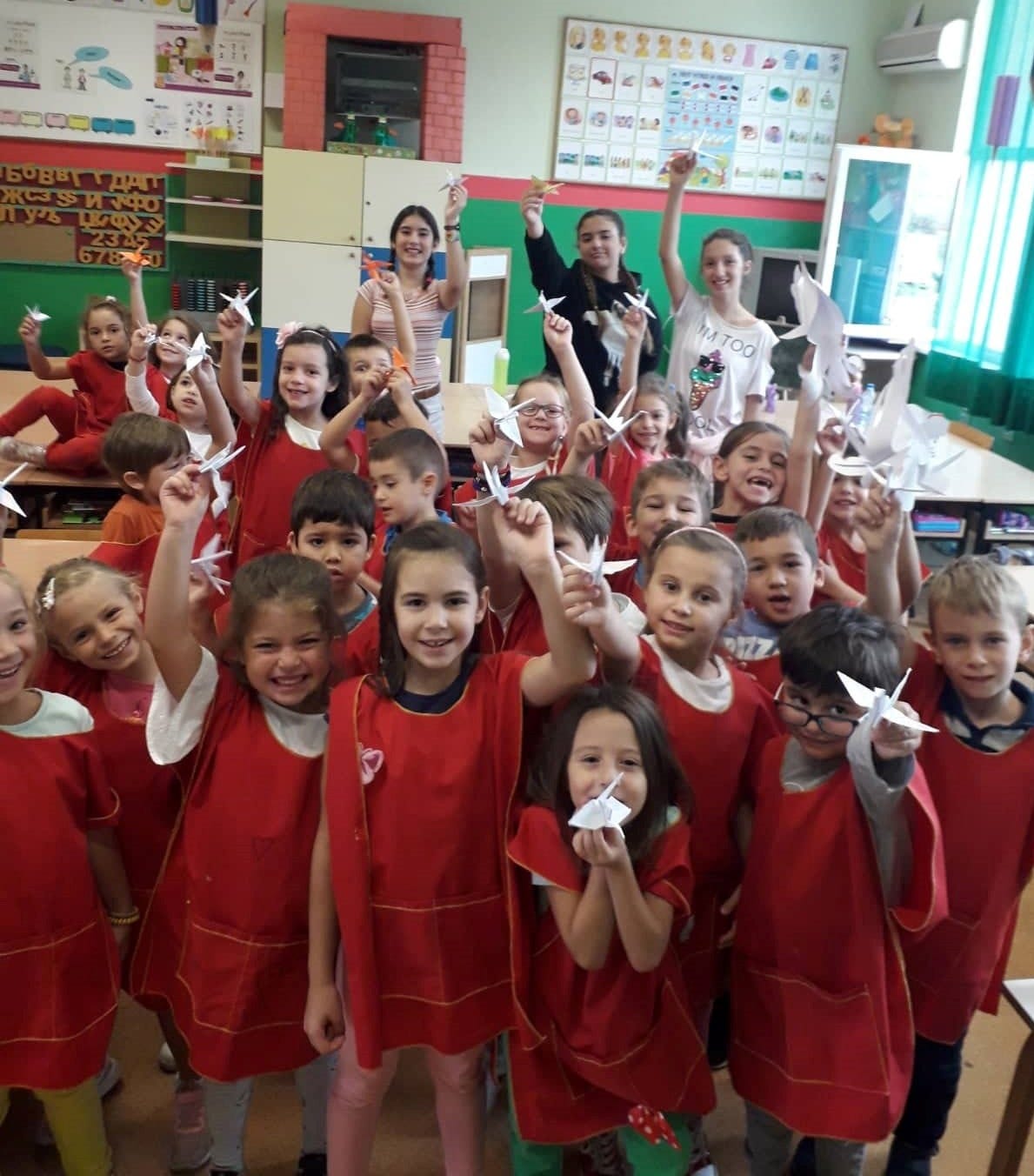
I built the first website myself, a crude but effective shout into the ether. Much to my surprise, the world responded. I hand-curated the exchange list, sending it once each week via email. A few at first, and then the signups poured in; over two million students enrolled in the years before the pandemic.
When students fold a crane, they know they are making something that represents more than paper. When they write a note to accompany it, even something as simple as “I hope you are happy” or “Peace from our school”, they are practicing something deeper: empathy. They also encountered new languages and learned to find countries on a map. They practiced penmanship and learned how the post office worked. And they gained a skill to share, often becoming the only person in their family who could fold an origami crane. Talk about building self-esteem!
Libraries hosted folding tables. Community groups joined in. Students who might never have met one another began sending small envelopes across cities, across states, across oceans.
The act is simple. The effect is not.
When a child receives a crane from another part of the world, something shifts. The world becomes less abstract. It becomes personal. There is a name. A drawing. A folded shape made by someone their own age.
Peace stops being a concept. It becomes relational.
The story of Sadako Sasaki, who folded cranes while hoping for healing after the bombing of Hiroshima, deepened that invitation. Her cranes were an act of hope in the midst of unimaginable devastation. They remind us that even in the darkest chapters of history, small acts matter. In 2017, I teamed with Sadako’s brother, Masahiro, to bring her true story to English readers. The Complete Story of Sadako Sasaki, published by Tuttle Publishing, is now available around the world.
But the heart of this project has always been students in the classroom.
We fold not because paper can solve the world’s problems.
We fold because the act itself teaches patience. Care. Intention. We fold because sending something handmade across a border requires effort, and effort signals value. We fold because when students create and exchange, they are participating in something constructive rather than destructive.
In a world that often feels loud and fractured, folding is quiet.
It slows hands. It focuses minds. It invites reflection.
And when that folded crane leaves one classroom and arrives in another, it carries more than paper. It carries a message: I see you. We are connected. Peace is something we can practice.
Today, cranes have traveled far beyond what I ever imagined in those early days. They have crossed oceans and languages. They have hung in museums and classrooms. They have been folded by children who may never meet in person, but who know, through a simple exchange, that someone else in the world chose to reach out.
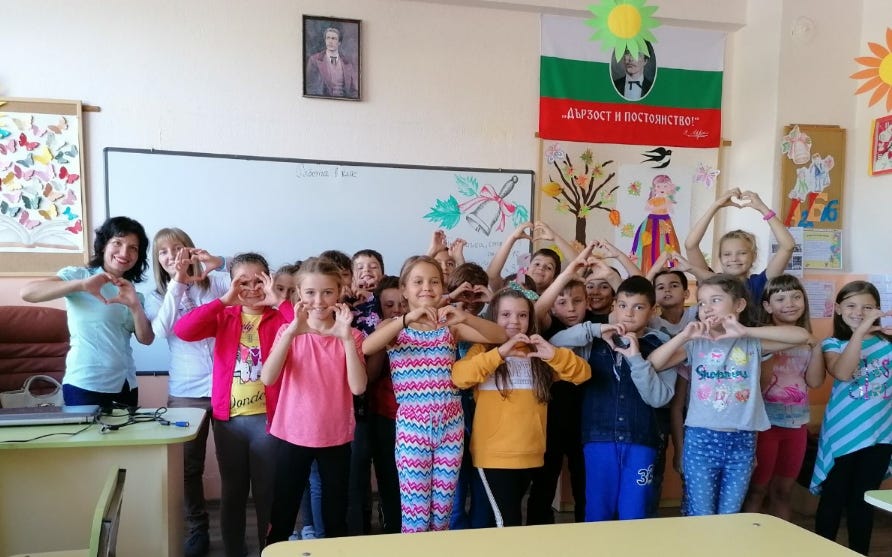
The reason we fold has not changed.
We fold to give children a constructive way to express themselves.
We fold to connect across differences.
We fold because small, intentional acts accumulate.
And so we continue.
We fold.
And we invite you to fold with us.
Sue
Absolutely love this! Thank you for your wonderful project , now more than ever!